
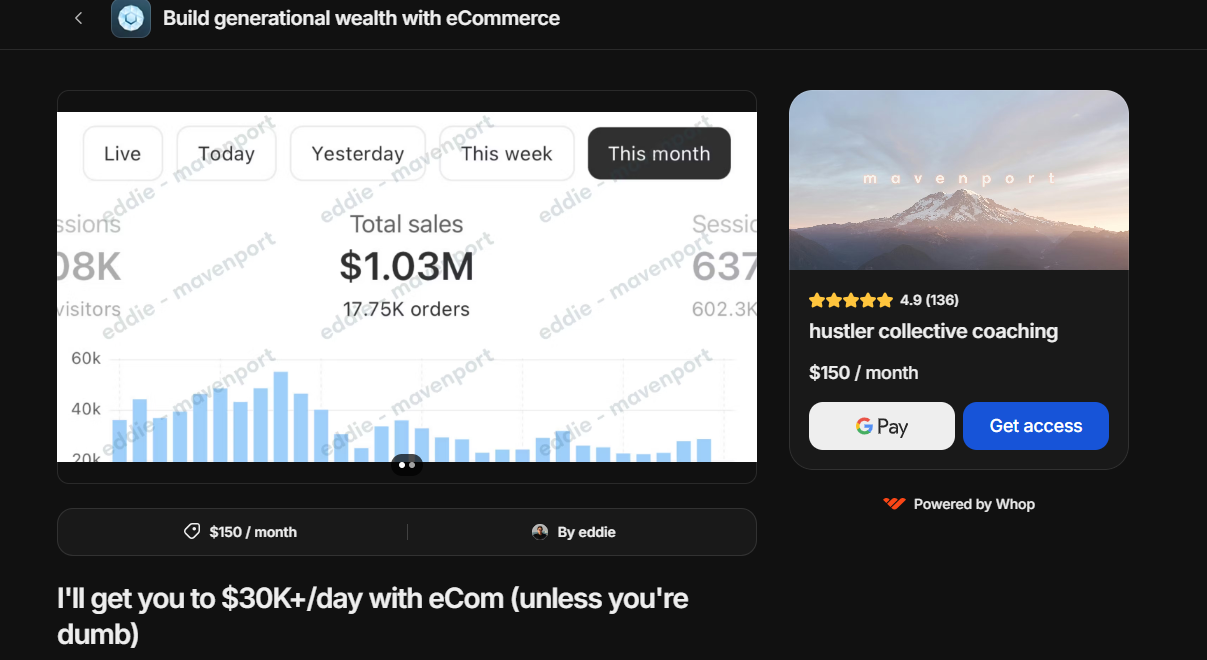

Description
Introduction
The e-commerce industry has created countless opportunities for entrepreneurs around the world. However, building a successful online business requires much more than simply launching a store and adding products. The most successful brands understand customer psychology, market positioning, product selection, advertising strategy, and operational efficiency.
The journey from starting an online store to creating a multi-million-dollar business requires consistent learning, testing, and improvement. Entrepreneurs who achieve significant growth usually develop a strong understanding of how different parts of e-commerce work together.
Leon Huang – literally everything i learned in ecom ($5M in only 1.5 years) represents a complete learning approach focused on understanding the principles, strategies, and experiences behind building a successful e-commerce business. The focus is not only on generating sales but also on developing the skills required to create a sustainable online brand.
This guide explores the important lessons, strategies, and frameworks that help entrepreneurs understand modern e-commerce growth and create stronger digital businesses.
Understanding Modern E-Commerce Success
The e-commerce industry has changed significantly over the years. In the early stages of online selling, many businesses could succeed by finding trending products and running basic advertisements.
Today, customers expect much more.
Successful brands focus on:
- Professional branding
- Excellent customer experience
- Strong product positioning
- Effective marketing systems
- Reliable fulfillment
- Continuous optimization
A profitable online store is built through a combination of creativity, strategy, and data analysis.
The biggest difference between struggling stores and successful brands is often the ability to understand what customers actually want.
The Fundamentals of Building an Online Store
Every successful e-commerce business starts with a strong foundation.
Choosing the Right Business Model
Entrepreneurs can approach e-commerce through different models, including:
- Dropshipping
- Private label products
- Direct-to-consumer brands
- Marketplace selling
- Subscription-based businesses
Each model has different advantages and challenges.
The right choice depends on:
- Available resources
- Business goals
- Market opportunities
- Long-term vision
Understanding the Target Customer
One of the biggest mistakes new entrepreneurs make is focusing only on products instead of customers.
Successful businesses begin by understanding:
- Who their customers are
- What problems they experience
- What motivates them to buy
- What solutions they are searching for
Customer research helps businesses create better:
- Product offers
- Marketing messages
- Website experiences
- Advertising campaigns
Finding Profitable Product Opportunities
Product selection plays a major role in e-commerce success.
A great product is not always the newest trend. It is usually something that provides clear value and solves a customer problem.
Characteristics of Strong Products
Successful products often have:
Clear Customer Benefits
Customers should immediately understand why the product matters.
Market Demand
There should be evidence that people are interested in purchasing the product.
Strong Marketing Potential
The product should allow businesses to create compelling advertisements and content.
Room for Branding
Products with branding opportunities can create stronger long-term businesses.
Product Research Strategies
Finding opportunities requires research and analysis.
Important research areas include:
Competitor Analysis
Studying competitors helps identify:
- Market gaps
- Successful strategies
- Customer expectations
- Improvement opportunities
Customer Feedback
Reviews and discussions provide valuable insights into:
- Customer needs
- Product improvements
- Common complaints
- Desired features
Market Trends
Understanding trends helps entrepreneurs identify growing opportunities while avoiding oversaturated markets.
Creating a Strong Brand Foundation
A successful e-commerce business is more than a collection of products. It is a brand that customers recognize and trust.
Strong branding includes:
Clear Brand Identity
A brand should communicate:
- Its purpose
- Its values
- Its unique advantages
- Its personality
Professional Visual Experience
Customers judge businesses quickly based on presentation.
Important elements include:
- Website design
- Product images
- Packaging
- Social media appearance
A professional image builds confidence.
Building Customer Trust
Trust is essential for online purchases.
Businesses can improve trust through:
- Customer reviews
- Transparent policies
- Quality content
- Responsive support
- Reliable service
Building High-Converting Product Pages
A product page is one of the most important parts of an online store.
A successful product page should answer customer questions and encourage action.
Important elements include:
Strong Headlines
The headline should clearly communicate the main benefit.
Benefit-Focused Descriptions
Customers care about outcomes more than technical details.
Good descriptions explain:
- How the product helps
- Why it is useful
- What makes it different
High-Quality Visuals
Images and videos help customers understand products better.
Effective visuals can show:
- Product usage
- Features
- Results
- Lifestyle applications
Social Proof
Reviews, testimonials, and customer experiences help reduce hesitation.
People often feel more confident purchasing when they see others having positive experiences.
Leon Huang – Literally Everything I Learned in Ecom ($5M in Only 1.5 Years): Complete Guide to Building, Scaling, and Growing an E-Commerce Business
Marketing Strategies for E-Commerce Growth
A great product and professional website are only the beginning of e-commerce success. The ability to attract the right audience and convert visitors into customers is what separates successful brands from unsuccessful ones.
Modern e-commerce marketing requires a combination of creativity, testing, analytics, and customer understanding.
Successful brands focus on creating marketing systems that consistently bring qualified customers to their stores.
Building a Strong Advertising Strategy
Paid advertising remains one of the fastest ways for e-commerce brands to reach potential customers.
However, successful campaigns require more than simply spending money on ads.
A strong advertising system includes:
Understanding the Audience
Before creating advertisements, businesses need to understand:
- Customer problems
- Buying motivations
- Interests
- Common objections
- Desired outcomes
Better audience understanding leads to better marketing messages.
Creating High-Quality Ad Creatives
Advertising success often depends on the quality of creative content.
Strong creatives usually include:
- Attention-grabbing openings
- Clear product benefits
- Emotional storytelling
- Demonstrations
- Customer-focused messaging
The goal is to quickly communicate why someone should care about the product.
Testing Multiple Approaches
Successful brands continuously test different ideas.
Testing may involve:
- Different videos
- Images
- Headlines
- Offers
- Customer angles
The purpose is to discover which messages create the strongest response.
Content Marketing and Brand Growth
Content allows brands to build relationships with customers beyond direct selling.
Useful content can include:
- Educational posts
- Product tutorials
- Customer stories
- Industry information
- Behind-the-scenes content
Good content helps businesses build trust and create stronger connections with their audience.
Social Media Strategy
Social platforms have become important channels for discovering and growing brands.
Effective social media strategies focus on:
Community Building
Brands can create stronger relationships by:
- Responding to comments
- Sharing customer experiences
- Encouraging discussions
- Creating valuable content
Product Storytelling
Instead of only showing products, successful brands tell stories around them.
Examples include:
- How the product solves a problem
- Why it was created
- How customers use it
- What makes it different
Customer Acquisition Systems
A scalable e-commerce business needs a reliable method for attracting new customers.
Customer acquisition involves:
Traffic Generation
Businesses can attract visitors through:
- Paid advertising
- Search visibility
- Social media
- Partnerships
- Content marketing
Conversion Optimization
Getting visitors is not enough. Stores must convert those visitors into buyers.
Conversion improvements include:
- Better product pages
- Clear offers
- Faster websites
- Improved checkout experiences
- Strong trust signals
Customer Retention
Long-term businesses focus on keeping customers.
Retention strategies include:
- Email campaigns
- Loyalty programs
- Personalized recommendations
- Customer support improvements
Repeat customers often provide significant long-term value.
Scaling an Online Business
Reaching higher levels of growth requires moving from a simple store into a structured business system.
Scaling involves improving:
- Operations
- Marketing
- Customer experience
- Financial management
- Team processes
Building Efficient Operations
As a business grows, managing daily tasks becomes more complex.
Important operational areas include:
Order Management
Businesses need reliable systems for:
- Processing orders
- Tracking shipments
- Managing customer updates
Customer Support
Strong support creates better relationships and protects brand reputation.
Important elements include:
- Fast responses
- Helpful communication
- Clear solutions
- Professional service
Financial Tracking
Successful entrepreneurs understand their numbers.
Important metrics include:
- Revenue
- Profit margins
- Advertising costs
- Customer acquisition costs
- Customer lifetime value
Data-driven decisions improve business performance.
Creating Long-Term E-Commerce Success
Building a valuable e-commerce business requires patience and consistency.
Successful entrepreneurs focus on:
Continuous Learning
Markets change constantly. Businesses must continue improving through:
- Testing
- Research
- Customer feedback
- Industry knowledge
Improving Customer Experience
A great customer experience creates loyalty.
Businesses should focus on:
- Product quality
- Communication
- Delivery experience
- Customer satisfaction
Building Brand Value
The strongest e-commerce businesses become valuable because customers recognize and trust them.
Brand value comes from:
- Reputation
- Customer loyalty
- Consistent quality
- Strong positioning
Common E-Commerce Mistakes to Avoid
Choosing Products Without Research
Many beginners select products based only on trends.
Better approach: Study demand, competition, and customer needs before launching.
Focusing Only on Sales
Revenue is important, but profitable growth requires understanding costs and systems.
Better approach: Track profitability and build sustainable processes.
Ignoring Customer Feedback
Customers provide valuable information about what works and what needs improvement.
Better approach: Use feedback to improve products and experiences.
Scaling Too Quickly Without Systems
Rapid growth can create problems if operations are not prepared.
Better approach: Build strong foundations before aggressive expansion.
Benefits of Learning Advanced E-Commerce Strategies
Understanding advanced e-commerce principles provides several advantages.
Better Decision Making
Entrepreneurs can make smarter choices based on research and data instead of assumptions.
Improved Marketing Performance
A strategic approach helps create more effective campaigns and better customer acquisition.
Stronger Brand Development
Businesses can move beyond simple product selling and create recognizable brands.
Increased Growth Opportunities
A well-built system creates opportunities for expansion into new markets and product categories.
Frequently Asked Questions
What is Leon Huang – literally everything i learned in ecom ($5M in only 1.5 years)?
It represents an e-commerce learning approach focused on understanding the strategies, systems, and lessons involved in building a successful online business.
Can beginners learn e-commerce successfully?
Yes. Beginners can learn e-commerce fundamentals, but success requires consistent learning, testing, and improving business strategies.
What is the most important part of an e-commerce business?
Successful businesses usually combine:
- Strong products
- Customer understanding
- Effective marketing
- Great user experience
- Reliable operations
Why are marketing creatives important?
Creatives help capture attention, explain product value, and influence customers during their buying journey.
How can an e-commerce business grow long-term?
Long-term growth comes from building systems, improving customer relationships, strengthening branding, and continuously optimizing performance.
Final Conclusion
Building a successful e-commerce business requires much more than launching an online store. The strongest entrepreneurs understand that sustainable growth comes from combining product strategy, customer psychology, marketing systems, and operational excellence.
Leon Huang – literally everything i learned in ecom ($5M in only 1.5 years) highlights the importance of understanding the complete e-commerce ecosystem. From product selection and branding to advertising and customer retention, every element plays a role in creating a successful online business.
The biggest lesson in modern e-commerce is that success is created through continuous improvement. Brands that analyze data, understand customers, test new strategies, and build strong relationships are better positioned for long-term growth.
Whether starting a new store or improving an existing business, focusing on strong foundations and scalable systems can create opportunities for sustainable success in the competitive digital marketplace.





Reviews
There are no reviews yet.