
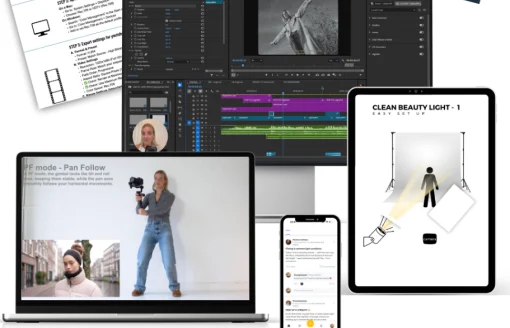

Description
Eva Glasbeek – Video Campaign Formula: An In-Depth, Honest Review
Video content dominates digital marketing across every major platform, from LinkedIn and YouTube to Meta and TikTok. However, creating videos that consistently convert viewers into paying clients remains a significant challenge for marketers, agency owners, and entrepreneurs. Many struggle with low retention, poor engagement, and ad campaigns that drain budgets without generating positive ROI.
Enter the Eva Glasbeek – Video Campaign Formula, a structured program designed to take the guesswork out of video marketing by providing a repeatable blueprint for strategy, messaging, production, and campaign execution.
In this comprehensive review, we provide an objective, detailed breakdown of what the program offers, how its curriculum is structured, its core strengths and potential drawbacks, and whether it delivers sufficient value for your time and investment.
What is the Video Campaign Formula?
The Eva Glasbeek – Video Campaign Formula is a specialized training framework built to help creators, digital agencies, and business owners plan, script, execute, and scale high-converting video ad campaigns.
Rather than focusing solely on video editing software or camera mechanics, the program prioritizes campaign architecture: customer psychology, hook design, offer framing, and structured distribution. The core objective is to shift video creation from a creative gamble into a systemized sales channel.
About Eva Glasbeek
Before evaluating any course, understanding the instructor’s background is critical. Eva Glasbeek has positioned herself as a video strategy specialist who focuses heavily on conversion-driven media rather than superficial vanity metrics.
Her methodology stems from practical experience running direct-response video campaigns for direct-to-consumer (DTC) brands, service providers, and digital products. Her approach emphasizes clear messaging over cinematic flair, arguing that strong positioning and psychological triggers generate far more revenue than expensive camera gear.
Course Structure & Module Breakdown
The curriculum is divided into core phases that take a campaign from initial audience research through scaling. Here is an analysis of what each section covers:
Module 1: Strategic Foundations & Audience Psychology
-
Customer Profiling: Identifying the core pain points, desires, and objections of your target market.
-
Offer Angle Selection: Framing your product or service so that video messaging resonates immediately within the first few seconds.
-
Competitor Deconstruction: Analyzing top-performing competitor video ads to identify industry benchmarks and gaps in messaging.
Module 2: High-Converting Scriptwriting Frameworks
-
The Hook System: Crafting visual and verbal openers designed to stop scrolling within the first 3 seconds.
-
The Problem-Agitation-Solution (PAS) Formula: Structuring body copy to highlight the prospect’s challenge before presenting your solution.
-
Objection Handling in Video: Addressing financial, logistical, or trust-based hesitation directly inside the narrative.
-
Clear Call-to-Action (CTA) Design: Crafting direct, frictionless instructions that prompt immediate viewer action.
Module 3: Streamlined Production & Shooting
-
Minimalist Equipment Setups: How to produce professional-grade videos using smartphones or mid-range cameras.
-
Directing On-Camera Talent: Techniques for ensuring presenters sound natural, authoritative, and engaging.
-
Visual B-Roll & Pattern Interrupts: Keeping viewer attention high through strategic graphic overlays, text captions, and pacing cuts.
Module 4: Campaign Launch & Platform Distribution
-
Platform-Specific Optimization: Adapting video formats, aspect ratios, and durations for Meta (Facebook/Instagram), YouTube, TikTok, and LinkedIn.
-
Campaign Structure: Setting up proper campaign objectives, custom audiences, and lookalike targeting inside ad managers.
-
A/B Testing Methodologies: Testing multiple hooks, angles, and CTAs systematically without overspending.
Module 5: Analytics, Optimization & Scaling
-
Key Performance Indicators (KPIs): Tracking essential metrics such as Hook Rate, Hold Rate, Click-Through Rate (CTR), and Return on Ad Spend (ROAS).
-
Fixing Weak Funnels: Diagnosing why a video campaign is failing based on performance drop-off data.
-
Horizontal & Vertical Scaling: Increasing daily ad spend while maintaining profitability across broad audiences.
Key Takeaways & Unique Methodologies
| Core Feature | Traditional Video Training | Video Campaign Formula |
| Primary Focus | Camera gear, editing techniques, effects | Messaging, customer psychology, conversion |
| Scripting Style | Generic story arcs | Direct-response frameworks & hook testing |
| Production Approach | High budget, cinematic gear required | Streamlined, practical setup focused on clarity |
| Campaign Goal | Views, likes, and brand awareness | Leads, customer acquisition, and measurable ROI |
1. Focus on the “Hook-Hold-Convert” Model
The training places heavy emphasis on the first 3 to 5 seconds of any video piece. By analyzing retention graphs, the course teaches creators how to minimize drop-off early in the viewing experience.
2. Systematic Script Templates
Instead of staring at a blank page, students receive pre-structured fill-in-the-blank script frameworks tailored for different business models (lead generation, e-commerce, software, local services).
3. Data-Driven Iteration
Rather than discarding a video campaign if it initially underperforms, the course teaches how to swap out low-performing hooks while keeping the main pitch intact, saving time and production costs.
Pros & Potential Cons
Strengths
-
Actionable Frameworks: Moves quickly from theory to practical application with downloadable worksheets and script guides.
-
Gear-Agnostic Approach: Does not force participants to purchase thousands of dollars in high-end filming equipment.
-
Comprehensive Coverage: Covers the full lifecycle of a campaign, bridging the gap between creative scriptwriting and technical media buying.
-
Clear Focus on Conversion: Designed specifically for generating measurable revenue rather than passive engagement metrics.
Considerations & Potential Drawbacks
-
Pacing for Absolute Beginners: Those completely unfamiliar with digital advertising platforms (like Meta Ads Manager) may experience a learning curve during the campaign launch modules.
-
Requires Active Implementation: This is not a passive course. Maximizing results requires executing filming, testing multiple script angles, and reviewing campaign metrics regularly.
Who Is This Program Best Suited For?
-
Digital Marketing Agencies: Teams looking to offer video creation and video ad management as a high-ticket service to clients.
-
E-Commerce Brand Owners: Merchants wanting to lower customer acquisition costs (CAC) through engaging product video ads.
-
Course Creators & Info-Product Sellers: Educators needing automated video funnels to convert cold traffic into paid enrollments.
-
B2B Service Providers & Consultants: Professionals aiming to build authority and generate qualified business leads through structured video campaigns.
-
Freelance Videographers: Film professionals wanting to upgrade their skillset from simple camera operators to strategic marketing partners who deliver client revenue.
Final Verdict: Is It Worth It?
The Eva Glasbeek – Video Campaign Formula delivers a clear, pragmatic blueprint for anyone serious about leveraging video as a predictable acquisition channel. Its main strength lies in its focus on direct-response messaging and systemized testing rather than over-complicated technical production.
If you are looking for a deep dive into advanced cinema lighting or post-production special effects, this program is not tailored for that purpose. However, if your primary objective is to write compelling scripts, produce clean and persuasive videos, and launch scalable ad campaigns that generate a measurable return on investment, this program provides an exceptionally solid framework.



Reviews
There are no reviews yet.