

Description
Introduction
The world of e-commerce has changed dramatically over the past decade. While traditional online stores often focus on selling large volumes of low-cost products, many entrepreneurs are now exploring a different approach: selling premium products with higher profit margins.
This business model focuses on attracting customers who are looking for quality, solutions, and exceptional experiences rather than simply searching for the cheapest option available.
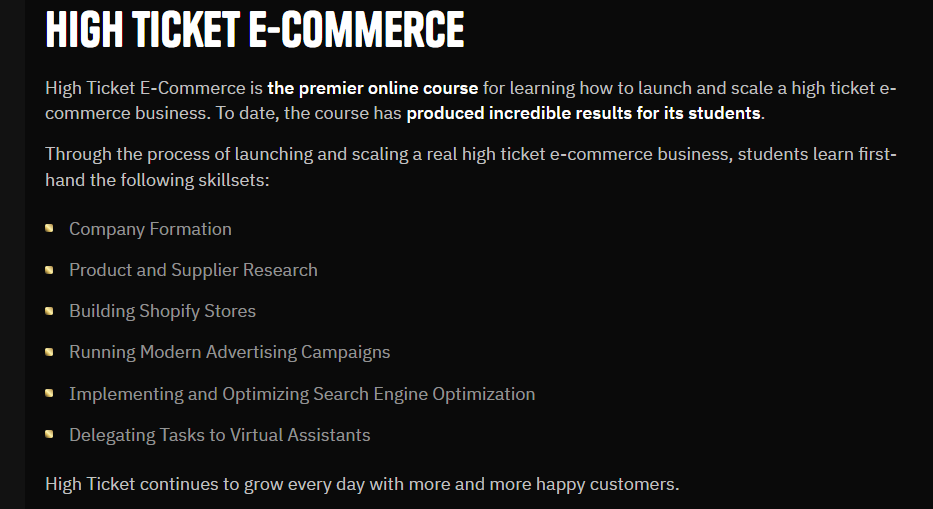
Brook Hiddink – High Ticket E-Commerce Program represents a structured approach to understanding this opportunity. The program focuses on helping aspiring entrepreneurs learn how to build online businesses around higher-value products, strategic marketing systems, and customer-focused selling methods.
Instead of competing in crowded markets where businesses fight over small profit margins, high-ticket e-commerce focuses on creating a stronger brand position, improving customer relationships, and developing sustainable growth strategies.
This detailed guide explores the core concepts behind the program, how high-ticket e-commerce works, and why this model has attracted attention from modern entrepreneurs.
What Is Brook Hiddink – High Ticket E-Commerce Program?
The program is designed around the idea that online businesses can achieve better results by focusing on premium products and strategic positioning.
Rather than building a store based only on product quantity, the approach emphasizes:
- Finding profitable product opportunities
- Understanding customer psychology
- Creating professional online stores
- Developing effective marketing campaigns
- Improving conversion rates
- Building long-term business systems
High-ticket e-commerce requires a different mindset compared to traditional online selling. Customers purchasing expensive products usually need more information, trust, and confidence before making a decision.
Therefore, successful sellers focus on creating authority, demonstrating value, and delivering a smooth buying experience.
The program aims to teach entrepreneurs how to approach these areas systematically instead of relying on random experimentation.
Understanding High Ticket E-Commerce
High-ticket e-commerce is a business model where companies sell products with higher price points compared to typical online retail items.
Examples of high-value products may include:
- Premium home equipment
- Luxury accessories
- Specialized technology
- Professional tools
- Custom products
- High-quality lifestyle items
The main advantage of this model is that businesses can generate more revenue from fewer transactions.
For example, a store selling inexpensive products may need hundreds of sales to achieve significant revenue. A business selling premium products may reach similar revenue with fewer customers.
However, higher prices also create additional responsibilities.
Customers expect:
- Better product information
- Stronger customer support
- Professional branding
- Reliable delivery
- Clear guarantees
- Greater trust
This means successful high-ticket sellers must focus on the complete customer journey.
Why High Ticket Selling Is Becoming Popular
Consumer behavior has changed significantly with the growth of digital commerce.
Customers today are not only looking for cheap products. Many are willing to invest more when they believe a product provides meaningful benefits.
Several factors contribute to the growth of premium online selling:
Increased Online Trust
Improved payment systems, better websites, customer reviews, and secure shopping experiences have made consumers more comfortable purchasing expensive products online.
Better Access to Global Markets
Entrepreneurs can now reach customers worldwide without needing physical stores.
Growth of Digital Marketing
Advertising platforms allow businesses to target specific audiences based on interests, behaviors, and purchasing patterns.
Demand for Specialized Products
Many customers prefer unique, premium, or problem-solving products instead of generic items available everywhere.
The Philosophy Behind the Program
A major focus of high-ticket e-commerce is building a business based on value rather than price competition.
Successful brands usually do not ask:
“How can we sell the cheapest product?”
Instead, they ask:
“How can we provide the best solution for a specific customer?”
This shift changes the entire business strategy.
A strong premium e-commerce brand focuses on:
- Customer needs
- Product quality
- Brand reputation
- Trust-building
- Long-term relationships
The goal is not simply completing transactions but creating a business that customers remember and recommend.
Building a Strong E-Commerce Foundation
Before launching advertisements or trying to generate sales, entrepreneurs need a solid foundation.
A successful online store usually includes several important elements.
Professional Website Design
A website is often the first interaction customers have with a brand.
A professional store should include:
- Clear navigation
- High-quality images
- Detailed product descriptions
- Easy checkout process
- Mobile-friendly design
- Trust elements
A poorly designed website can reduce customer confidence, especially when selling expensive products.
Strong Brand Positioning
Premium products require premium presentation.
Brand positioning involves communicating:
- Who the product is for
- Why it is valuable
- What makes it different
- Why customers should choose it
Strong positioning helps businesses avoid competing only on price.
Customer Research
Understanding the target audience is one of the most important steps.
Entrepreneurs should analyze:
- Customer problems
- Buying motivations
- Preferences
- Objections
- Expectations
The better a business understands its audience, the easier it becomes to create effective marketing messages.
Product Selection Strategy
Choosing the right product is one of the biggest factors in high-ticket e-commerce success.
A strong product opportunity usually has:
Clear Customer Demand
The product should solve a problem or fulfill a strong desire.
Strong Perceived Value
Customers should understand why the product deserves its price.
Healthy Profit Potential
The business should have enough margin to support marketing, operations, and growth.
Market Differentiation
Products that offer unique advantages are often easier to position.
Successful entrepreneurs spend time researching before investing heavily in marketing.
Brook Hiddink – High Ticket E-Commerce Program: Complete Guide to High Ticket Online Selling
Marketing Strategies for High Ticket Products
Selling premium products requires a different marketing approach compared to low-cost products. When customers are making a larger investment, they usually spend more time researching, comparing options, and building confidence before purchasing.
A successful high-ticket e-commerce strategy focuses on creating trust, educating customers, and showing the value of the product rather than simply promoting discounts.
Building a Strong Marketing Funnel
A marketing funnel helps guide potential customers from discovering a product to becoming loyal buyers.
A typical high-ticket customer journey includes:
1. Awareness Stage
At this stage, potential buyers become aware of a problem or need. Businesses use content, advertisements, videos, and educational materials to attract attention.
Examples include:
- Social media content
- Search engine optimization
- Educational videos
- Industry guides
- Informative blog posts
The goal is not immediate selling but creating awareness and interest.
2. Consideration Stage
Customers begin researching solutions and comparing different options.
Businesses can support this stage by providing:
- Product demonstrations
- Customer testimonials
- Detailed comparisons
- Case studies
- Frequently asked questions
The more information customers receive, the more confident they become.
3. Decision Stage
At this point, customers are close to purchasing. The focus should be on removing doubts and making the buying process simple.
Important elements include:
- Clear product benefits
- Transparent pricing
- Secure checkout
- Strong customer support
- Return policies
- Guarantees
Using Paid Advertising Effectively
Paid advertising is one of the fastest ways to reach potential customers, but high-ticket products require careful targeting.
Successful campaigns usually focus on:
Audience Research
Understanding customer interests, behaviors, challenges, and buying patterns helps businesses create more effective campaigns.
Creative Testing
Different advertisements should be tested to discover which messages, images, and videos generate the best response.
Performance Analysis
Important metrics include:
- Conversion rates
- Cost per acquisition
- Customer value
- Return on advertising investment
- Website engagement
Continuous optimization helps businesses improve results over time.
Creating High-Converting Product Pages
A product page is one of the most important parts of a premium online store.
A strong product page should include:
Detailed Product Information
Customers purchasing expensive items need complete information before making decisions.
Include:
- Features
- Benefits
- Specifications
- Usage examples
- Customer advantages
Professional Visual Content
High-quality images and videos help customers understand the product and imagine using it in their lives.
Trust-Building Elements
Important trust factors include:
- Reviews
- Testimonials
- Secure payment options
- Clear policies
- Brand story
Trust plays a major role in premium purchases.
Creating an Exceptional Customer Experience
High-ticket e-commerce is not only about selling products. It is about creating an experience customers value.
A premium customer journey includes:
- Fast communication
- Helpful support
- Smooth purchasing process
- Professional packaging
- Follow-up after purchase
Customers who receive excellent service are more likely to become repeat buyers and recommend the brand to others.
Scaling a High Ticket E-Commerce Business
Once a business starts generating consistent sales, the next challenge is scaling.
Growth requires systems that allow the business to operate efficiently.
Improving Operations
Successful stores create processes for:
- Inventory management
- Customer communication
- Order processing
- Supplier relationships
- Quality control
Efficient operations reduce problems and improve customer satisfaction.
Expanding Marketing Channels
Relying on one traffic source can limit growth.
Businesses often expand through:
- Search marketing
- Social media platforms
- Email campaigns
- Influencer partnerships
- Content marketing
- Retargeting campaigns
Multiple channels create more stability and opportunities.
Building Customer Loyalty
A profitable business focuses not only on acquiring customers but also on keeping them.
Strategies include:
- Loyalty programs
- Exclusive offers
- Educational content
- Personalized communication
- Community building
Long-term relationships often create more value than one-time purchases.
Benefits of Learning High Ticket E-Commerce Strategies
Understanding premium online selling provides several advantages for entrepreneurs.
Higher Profit Potential
Selling valuable products can create stronger margins compared to competing only with inexpensive items.
Less Price Competition
Premium positioning allows businesses to focus on value instead of constantly lowering prices.
Stronger Brand Development
High-quality products and professional experiences help businesses build recognizable brands.
Better Customer Relationships
Premium customers often appreciate personalized service and deeper engagement.
Long-Term Business Growth
A strong foundation allows businesses to expand products, markets, and customer communities.
Common Mistakes to Avoid
Choosing Products Without Research
Many beginners select products based only on personal interest. Successful businesses analyze demand, competition, and customer needs first.
Focusing Only on Advertising
Marketing can bring visitors, but the website experience, product quality, and customer service determine long-term success.
Ignoring Customer Trust
Expensive purchases require confidence. Weak branding or unclear information can prevent customers from completing purchases.
Expecting Immediate Results
Building a successful e-commerce business requires testing, learning, and continuous improvement.
Neglecting Customer Support
Poor communication can damage reputation and reduce repeat purchases.
Frequently Asked Questions
What is Brook Hiddink – High Ticket E-Commerce Program?
It is a training approach focused on teaching entrepreneurs how to build online businesses around premium products, strategic marketing, and customer-focused selling systems.
Is high-ticket e-commerce suitable for beginners?
Yes, beginners can learn the fundamentals, but success requires patience, research, consistent effort, and willingness to improve.
How is high-ticket e-commerce different from traditional online selling?
Traditional e-commerce often focuses on selling many lower-priced products, while high-ticket models focus on fewer sales with higher-value products and stronger customer relationships.
Do high-ticket products require advanced marketing skills?
Marketing knowledge helps, but skills can be developed through practice, testing, and learning proven strategies.
Can this business model work internationally?
Yes. Online stores can reach customers worldwide, although businesses must consider shipping, regulations, payment methods, and customer expectations in different markets.
Final Conclusion
The future of e-commerce is moving beyond simple product transactions. Successful online businesses increasingly focus on creating valuable solutions, building trust, and delivering premium customer experiences.
Brook Hiddink – High Ticket E-Commerce Program represents a structured approach to understanding how entrepreneurs can enter the premium online selling space with a clear strategy. By focusing on product selection, branding, marketing systems, customer psychology, and long-term growth, businesses can create stronger foundations for success.
High-ticket e-commerce is not about finding shortcuts or overnight results. It requires research, commitment, continuous optimization, and a focus on delivering real value to customers.
Entrepreneurs who understand these principles can position themselves more effectively in competitive markets and build online businesses designed for sustainable growth.

Reviews
There are no reviews yet.